Shem, Ham, And Japheth
This is part 6 of the The History of the World Series
; The History of the World is part 1.
Click here to read in series
Surprisingly little is said in the Bible about Noah and his three sons; after the sacrifice outside the ark, the only time we hear of any of the four men is when Noah got drunk, presumably at Gobekli Tepe, perhaps 40 years later – which proves they were still together at that time. After that, not one word from any of them.
This is surprising, considering Noah lived 350 years after the flood, and Shem lived 500 year after the flood. It’s likely that Ham and Japheth lived, if not equally long, then at least longer than what is normal today. So what were they doing? Why is their history nowhere to be found?
Perhaps it is misfiled under another name – somewhere no one would think to look.
What we do know is that God loved Noah; and we know that Shem was also favored, since he received the blessing of God, when Noah said “Blessed be Yahweh, the God of Shem” (Genesis 9:26). This argues that Shem, and not necessarily his brothers, followed Noah’s beliefs closely.
We would expect to find Shem, wherever he went, more closely aligned to the ways of Noah than his brothers; now in a patriarchal society, the oldest – or at least, the one who gets the birthright – tends to stay with his father and take over the bulk of the inheritance over those who “are scattered abroad.”
Luke 15:29-31 And he answering said to his father, Lo, these many years do I serve thee, neither transgressed I at any time thy commandment … And he said unto him, Son, thou art ever with me, and all that I have is thine.
This suggests that Shem would have stayed with Noah, and Arphaxad would have gone with him, and so on, throughout the lineage. All things being equal, of course. And while Shem would certainly teach all of his sons his ways the others who went their own separate ways probably wound up differing more than those who stayed with Noah and Shem.
So wherever the lineage of Shem and Arphaxad wound up, we would expect to find a reasonably righteous culture that in some ways resembles the ways of the Biblical Hebrews of Moses’ time. Much more on that later.
Next, two different descendants of Ham, Etana and Nimrod, were kings in Sumer. We need not elaborate how God felt about Nimrod, nor stress that He dislikes human kingship in principle (1 Samuel 12:12, Luke 22:15). This suggests that God and Ham were not close.
This much we can learn from the Bible, and not much more without some help. Fortunately, the Sumerians have a lot to contribute here. We will start with Ham, by working backwards from Nimrod/Enmerkar, a solid point of connection between the Bible and Sumer.
In the Bible, Nimrod is the son of Cush, himself son of Ham. In Sumer, the name of Nimrod is Enmerkar, who is the son of Meshkiangasher. Therefore, Meshkiangasher must be Cush. Why the difference in name? Babel.
Remember, the Bible is written in Hebrew, a Semitic language; but Sumerian was an unrelated language which wound up being quite different after Babel. So most, if not all, names are different between the two languages.
Cush/Meshkiangasher, the SKL notes, was the “son of Utu,” the Sumerian sun god. Now if we take this literally, as scientists are loath to do, it means that Cush’s father was the Sumerian god of the sun. That’s absurd, of course.
…But what if it was true?
Obviously, I don’t believe in the divinity of Nimrod’s grandfather, but I do believe the entire human race might have. Why? Because he was one of only three brothers who survived the flood! Because if Enmerkar is Nimrod, then Meshkiangasher is Cush; which in turn means Utu must be Ham!
Furthermore we have reason to believe that Utu was, at one time, a literal person; because all the Sumerian people considered themselves his descendants, not only Meshkiangasher:
“Utu, shepherd of the land, father of the black-headed, when you go to sleep, the people go to sleep with you.” (Lugalbanda in the Mountain Cave)
The “black headed” people is a reference to the Sumerian people, their name for themselves. Which is exactly what we would expect – that the father of Cush, ancestor of the undeniably black-skinned Ethiopians, would have all the genes necessary to create black-headed people.
Whether this simply means black-haired or actually black-skinned is debated, and debatable, and frankly not important. The monuments do suggest curly hair, at the very least. But the existence of such a physical descriptor to differentiate the Sumerians from the Shemites proves there was a difference. Why else name themselves black-headed unless the other people weren’t?
But our main point is… the entire Sumerian population considered him their literal ancestor, and if he was Ham, then he literally was!
SHAMASH
Obviously, once he was no longer around, the Sumerians quickly mythologized this person into abstraction, but in these early myths – dating from within a few centuries after Babel – they still remembered that they descended from a man/god named Utu, the sun-god – whom we must identify as Ham.
But this is where it gets interesting. There were two main languages in Mesopotamia, Sumerian and Akkadian; Akkadian evolved into Assyrian and is relatively close to Hebrew linguistically, since both are Semitic languages – languages of the sons of Shem.
And fascinatingly, the name for the sun-god in Akkadian, synonymous with Utu, was Shamash. We have already proven that if the genealogy is taken seriously, Shamash must correspond with the Biblical Ham, spelled Cham in Hebrew.
Thus, Shamash is literally Cham-ash!
From time to time, I may be accused of making up things and seeing connections that aren’t there. And that’s probably fair – but we must agree that I’m immensely lucky to be able to connect the Hebrew name of Enmerkar to Nimrod, and also to connect the name of his grandfather Shamash to Ham!
Why connect Ham to the sun? I’m glad you asked. In Hebrew, Ham means hot. It’s no great stretch to get from “hot” to “sun.” Another meaning, or at least a closely related word in Hebrew, is “servant.” And interestingly, the word Shamash is also derived from the word “servant.”
This etymology of Ham’s name is probably why Noah cursed Ham’s son Canaan by making him a servant to his brethren.
Genesis 9:25 And he said, Cursed be Canaan; a servant of servants shall he be unto his brethren.
This episode has always been very strange, for Canaan is cursed for something that apparently Ham did. Josephus explains this saying that Noah was reluctant to curse someone so near of kin to him as a son; I guess grandsons were fair game.
But regardless, it strongly connects Ham, and the connected ideas of hot or servant, to Shamash and its meanings of sun and servant. Again, imagine our luck to be able to do this so easily…
THE DEIFICATION OF THE SONS OF NOAH
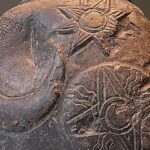
Now if Shamash/Ham is the father of the Sumerian people, it would stand to reason that the other brothers were likewise deified. And so we are gratified to learn that Shamash was one member of a sort of Mesopotamian trinity of Shamash, Ishtar, and Sin, or the Sumerian version Utu, Inanna, and Nanna, representing the sun, Venus, and moon, respectively.
Can we connect the other brothers to these deities? Well, the moon god usually spelled Sin in English based on a late Assyrian spelling was actually originally spelled Suen in Akkadian. A name evolving to Suen from Shem is not implausible – n to m is a common change, and both s and sh are sibilants; and variations in the form of the earliest spellings in cuneiform show that there is definitely room for it to have been a name like Shem:
Various phonetic spellings are also attested, for example sú-en, sí-in, si-in and se-en. The large variety of these variants might indicate that the first sibilant was difficult to render in cuneiform. In early Akkadian, the sound /s/ was an affricate [ts], which would explain its initial representation with Z-signs and later with S-signs. (Wikipedia, Sin_(Mythology)
And as you travel across the modern Semitic cultures in the Middle East to this day, you will find, atop every mosque, a crescent moon – a symbol whose meaning, lost in the mists of time, refers to their first ancestor Shem. Hardly conclusive, but it certainly fits.
This just leaves Japheth; if this pattern is to be believed, he must picture Venus; which is odd, since Venus was the symbol of the goddess Ishtar, and consistently seen as female. Is this the death of the theory?
Well, remember a few facts; first, that these legends were invented well after the tower of Babel, thus after Japheth was no longer around to defend himself when his brothers called him a girl. Second, the deity Ishtar is unusual in that she is both a goddess of war and of love. This causes many scholars to think she may be the result of the merging of two earlier deities:
The morning star may have been conceived as a male deity who presided over the arts of war and the evening star may have been conceived as a female deity who presided over the arts of love. Among the Akkadians, Assyrians, and Babylonians, the name of the male god eventually supplanted the name of his female counterpart, but, due to extensive syncretism with Inanna, the deity remained as female, although her name was in the masculine form. (Wikipedia, Inanna)
The name Inanna is actually a masculine name. One possible explanation for this is that both the husbands and the wives of the sons of Noah were deified, and over time merged with their husbands’ identities; in this case, the wife became more dominant, but still retained some of her husband’s traits.
The connection with Japheth and Venus does make a certain amount of sense; because where does one find Venus? Near the rising (or setting) sun. Precisely where Japheth went; and anciently identified himself as in “the land of the rising sun.”
Thus, Japheth is where the sun rises, with the sun when he rises… thus, Venus. A stretch perhaps, but it fits the pattern.
VENUS
If Shem is any indication, the sons of Noah lived for a long time, much longer than later generations. This would have made them seem immortal, and thus divine. Hence why the Sumerians said to Utu “when you go to sleep, the people go to sleep with you” – if Ham ever died, they believed, the Sumerians would die with him.
Again, the information is there in the ancient records, and it agrees perfectly with the Bible, but you have to listen to it – pagan myth as well as the Bible. You can’t learn anything if you already know everything – which unfortunately is an affliction common to historians.
As one of the few men to survive the flood, they were the only ones who know the stories about this whole other world, with firsthand knowledge of its wisdom and technology – which again, makes them special. And finally, because people always worship their ancestors sooner or later.
Alfonso Archi, who was involved in early excavations of Ebla, assumes Ishtar was originally a goddess venerated in the Euphrates valley… He considers her, a moon god (e.g., Sin) and a sun deity of varying gender (Shamash/Shapash) to be the only deities shared between various early Semitic peoples of Mesopotamia and ancient Syria, who otherwise had different not necessarily overlapping pantheons. (Wiki, Ishtar)
I would thus argue that the three best known gods of early man, Shamash the sun, Sin the moon, and Ishtar the planet Venus were seen as representatives of the three sons of Noah, whether by their encouragement or against their will (compare to Paul and Barnabas in Acts 14:12).
While there were many gods and goddesses in the Sumerian/Akkadian religion, the most significant and present deities in people’s lives were the trinity of Shamash, Ishtar/Inanna, and Sin/Nanna; these were the ones invoked to defend boundaries, witness treaties, and so on.
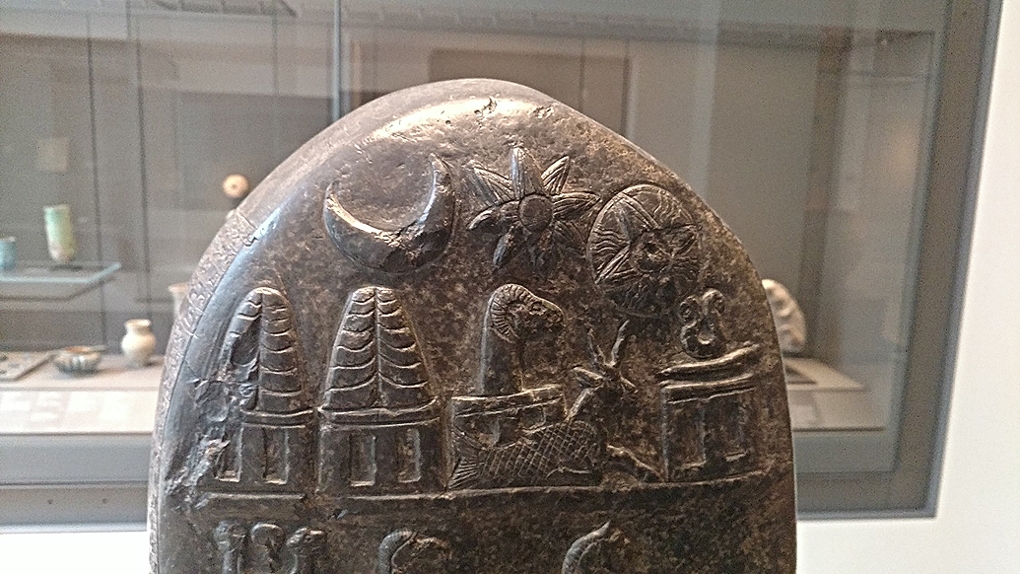
This common Kudurru (boundary marker) dates to the Kassite Babylonian period – around ‑1200-800; at the top, watching over the contract are Sin, Shamash, and Inanna, left to right as the crescent moon, sun, and starburst. It was stones like these that the Bible forbade anyone moving:
Deuteronomy 19:14 You shall not remove your neighbour’s landmark, which they of old time have set, in your inheritance which you shall inherit, in the land that Yahweh your God gives you to possess it.
It makes sense, then, that the eldest patriarchs of the human race were the ones who were invoked to defend the boundaries of inheritances, and as the arbiters as justice and truth; but strangely, the Sumerians did not, as a rule, consider them the oldest or most powerful of the gods – they were all second or third generation deities!
The details changed with culture, but generally the moon was considered the father of the sun and Venus. Now since Shem’s name literally means “name,” in the sense of “his name is famous,” and since Shem clearly got the birthright of Noah since the lineage of Christ passes through him, Shem was unarguably in charge.
Thus, Shem-as-the-moon would be expected to be seen as the authority figure. And if the generations are a bit inaccurate, we must remember we are looking at them through a very many different retellings.
But you see now that the sons of Noah do not disappear from the historical record; indeed, they are arguably the most written about people in that period of history, precisely as we would expect. It’s just that their exploits are hidden in the stories of Shamash, Inanna, and Nanna.
Unfortunately, due to their deification, the actual truth must be filtered from a lot of fantastic nonsense and immense amounts of embellishment as the stories took on a life of their own. And the later the myth, the more fanciful and the less useful it is to discern the real actions of these patriarchs.
THE EXODUS OF CUSH
We know that Africa is known as the land of Ham, so he likely emigrated there at some point; I have no way to guess when or precisely where. My guess is immediately after Babel, probably with his son Cush, of whom we can say much more.
The SKL says of Enmerkar that he was “the son of Mesh-ki-ang-gasher, the king of Unug, who built Unug [Uruk].” So Enmerkar/Nimrod built Uruk, not his father Meshkiangasher/Cush – both the Bible and the SKL agree on that.
But weirdly, the SKL lists Meshkiangasher as the first king of Uruk before Enmerkar; even though the same document clearly says Enmerkar was the one who built the city. This causes many people to think he’s a later addition; but these lists were not built for our modern purposes; no one really cared who literally ruled the city, they wanted to know that the current ruler was legitimate because of his ancestry.
And so here, Enmerkar, the founder, cites his (presumably famous) father as his predecessor, who in turn was sired by the (obviously famous) sun-god. Yet Meshkiangasher never ruled Uruk; in fact, he left Sumer altogether.
The SKL tells us that “Mesh-ki-ang-gasher entered the sea and disappeared,” or another translation has it “went into the sea and came out (from it) to the mountains.” Historians express skepticism as follows:
The rendering “came out” is also supported by the fact that the journey of Mes-kiag-gasher, the “son of the sun-god,” obviously reflects the daily journey of the sun. In the evening the sun goes down into the sea in the west. During the night it travels underground, and in the morning it comes out to the mountains in the east. Crossing over them, it then appears again to the world. (Thorkild Jacobson, Sumerian King List)
This seems very plausible, and makes excellent sense, until you realize… the sun does not set in the sea in Sumer!! Nor does it set in the sea at any inhabited place for hundreds of miles in any direction! How, then, are these people expected to have developed a legend that would only make sense if you lived on the west coast of a continent??
Therefore, this was not a fictional reference to the sun’s journey into the sea at all; there is no way that the mostly landlocked Sumerians could have conceived of the sun being born in the ocean and going into it at night.
Historians refuse to take this history seriously, but we will – because we know Shamash is Ham. So imagine for a moment if I, writing from Uruk, on the banks of the Euphrates, with desert on every side, were to tell you “my dad went into the sea and disappeared,” what would you think?
You would, correctly, understand that he had gotten into a boat, floated down the river into the Persian Gulf, and never returned. And that when he did come out of the sea, he did so in a land full of mountains.
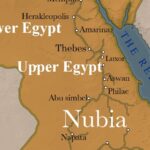
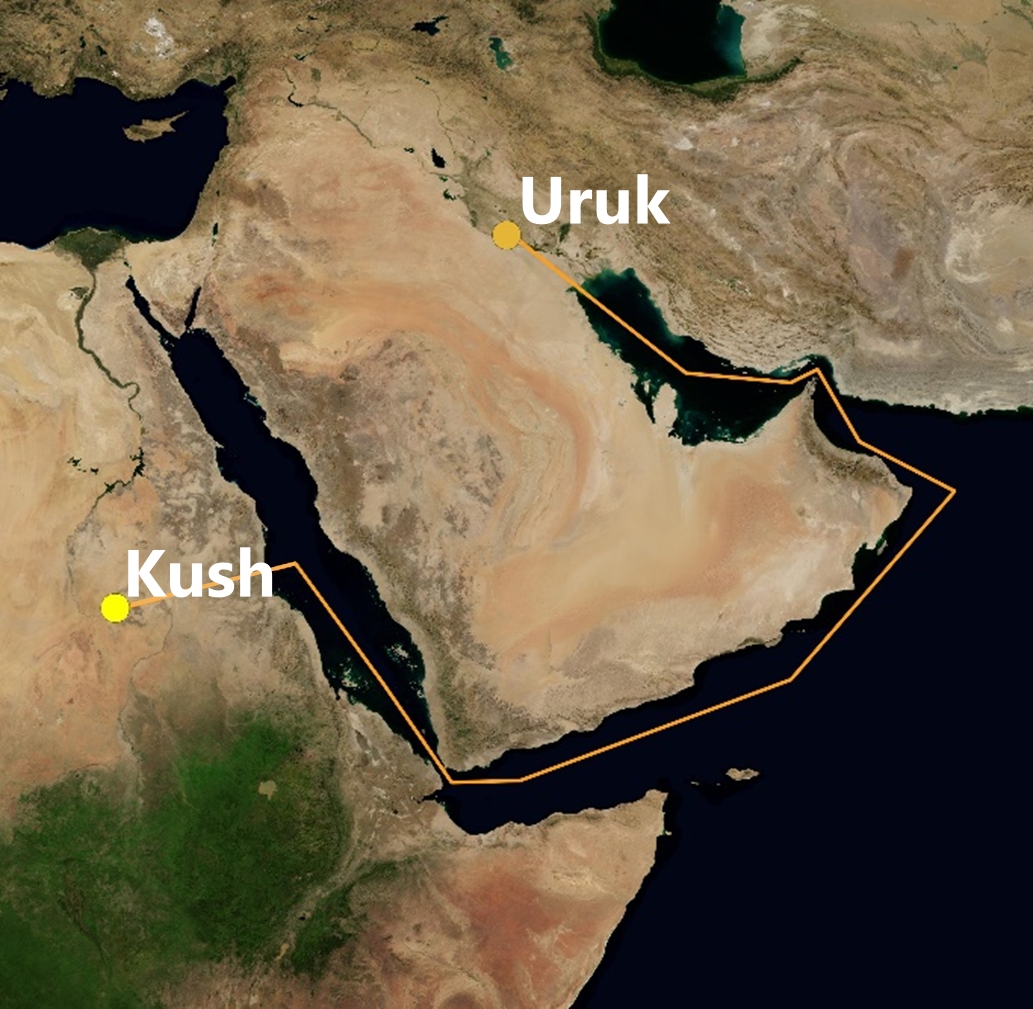 But where, exactly, did he go? This is where we have a huge advantage over the worldly scholars, for we know what happened with Nimrod’s father Cush; he settled in eastern Africa, a place known as Kush since the earliest history, mentioned repeatedly in the Bible and applied to the areas that are now Ethiopian and Sudan – and Ethiopia is by far the most mountainous country in that part of the world!
So yes, the first settler of this country would indeed have had to “disappear into the sea,” and he never returned because he “came out of the sea” and lived in the mountainous region that bears his name to this day!” Makes perfect sense, doesn’t it? But only if you use BOTH the Bible and history!
ARPHAXAD
So Japheth went out to sea with all his family, and was probably never seen again; judging by ethnicity and culture, and simply knowing what the route of least resistance would have been, some of his family got off in Malaysia, Indochina, China, and so on. These voyages may, of course, have taken several generations, but in any case they sailed off the map and disappear from our history.
Meanwhile, much closer to home, Cush went to Ethiopia, and Ham probably went with him, to better manage his children from his own continent. Early Egyptian civilization seems to have spread downriver from the direction of Ethiopia, so that fits well with archaeology – Mizraim must have gone with them as well, and just kept on going a bit farther as did Phut. Canaan on the other hand probably went upriver and west.
Simultaneously Elam was moving east, Asshur went northeast, and Aram and Lud went upriver to their old land – by now recovered from the earlier overuse. Lud kept going, possibly even ending up in Europe. But where did Arphaxad go?
This is the oddest gap in the list, since Arphaxad was the ancestor of the Hebrews. So it’s strange that the family tree with which the Bible was most concerned has the least known about it from the time of the flood until Abraham, almost four centuries later.
Jewish historian Flavius Josephus (37–c. 100) links Arpachshad and Chaldaea in his Antiquities of the Jews: “Arphaxad named the Arphaxadites, who are now called Chaldeans.” Umberto Cassuto suggests that the name “Arpachshad” (ארפכשד) may be compounded from Arapcha-Kesed [meaning the land/people of Kesed]. (Wiki, Arphaxad)
This connection is weak; why would the first child after the flood be named after the people of a given land, which was all, at that time, empty? The connection with the Chaldeans is by no means certain, although I give it some weight given the antiquity of the belief.
Regardless, the Chaldeans, as a named people, did not exist until the 10th century; they cannot, therefore, be literally the oldest tribe of man – at least, not unless they came from somewhere off the map of the known world:
In the early period, between the early 9th century and late 7th century BC, mat Kaldi [Chaldean] was the name of a small sporadically independent migrant-founded territory under the domination of the Neo-Assyrian Empire (911–605 BC) in southeastern Babylonia, extending to the western shores of the Persian Gulf.
The expression mat Bit Yâkin is also used, apparently synonymously. Bit Yâkin was the name of the largest and most powerful of the five tribes of the Chaldeans, or equivalently, their territory. The original extension of Bit Yâkin is not known precisely, but it extended from the lower Tigris into the Arabian Peninsula. Sargon II mentions it as extending as far as Dilmun or “sea-land” (littoral Eastern Arabia). “Chaldea” or mat Kaldi generally referred to the low, marshy, alluvial land around the estuaries of the Tigris and Euphrates, which at the time discharged their waters through separate mouths into the sea. (Wiki, Chaldea)
Most historians believe that the Chaldeans were originally from the land of Aram, who migrated down to southern Mesopotamia in the 10th-8th centuries. But I have not been able to find any hard evidence for that theory except their language, which is a west Semitic language – i.e., from the region of Canaan or the upper Euphrates.
It’s a reasonable assumption that they must have come from where that language was spoken; we, however, take issue with the assumption that “west Semitic” was only spoken in that region, for reasons which will become apparent over the next few chapters.
ABRAHAM’S HOMETOWN
If Arphaxad was indeed the Chaldeans, then their southern Sumerian territory is consistent with the fact that “Ur, of the Chaldees” is identified as Abraham’s hometown. But what isn’t consistent is the fact that it would not become known as Chaldean territory for a thousand years after Abraham left it.
Josephus unambiguously places Ur of the Chaldees in Mesopotamia, not in Syria as some scholars think. But scholars know that in that day and age, it was still a Sumerian city – a flourishing one at that. Why, then, were the only known Arphaxadites of that time dwelling there?
Genesis 11:27-31 …Terah became the father of Abram, Nahor, and Haran. Haran became the father of Lot. Haran died before his father Terah in the land of his birth, in Ur of the Chaldees… Terah took Abram his son, Lot the son of Haran, his son’s son, and Sarai his daughter-in-law, his son Abram’s wife. They went from Ur of the Chaldees, to go into the land of Canaan. They came to Haran and lived there.
What was Terah doing there? This was certainly not the inheritance of the Arphaxadites. So why is the most important branch of their family living there?
There’s a great story here.
To solve this particular mystery – and we will – we have to go on a very long and roundabout trip. But it’s worth it, I promise. There was, in fact, a powerful civilization who existed all of this time – known to historians, but unknown by name – who were, in fact, ancestors of the Chaldeans among many others.
But that’s another chapter.

This is part 6 of The History of the World Series
 The Richest Man in History
  Thutmose III and Shishak
  Solomon and the Queen of Sheba
  Judges to Kings
  Joshua and Jericho
  What Is The LOVE Of God?
  Everything You Believe About God Is WRONG!
  Make Up Your Mind!
  What Is Faith?
  How DARE you FEAR the judgment of God!
  Firstripe Figs
  The Bride Of The Father
  Exodus 40 – The Plan Of God
  The Temple Of God
  Pillars Of The Temple And The Brass Sea
  GEHENNA WITH ‘EM
  When Did God Forbid Polygamy?
  When You Shouldn’t Pray For Someone
  The Sins of the Father
  The First Paul