The Rising of Sothis
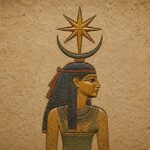
Before we continue with Egyptian history, we need to pause to inspect the foundations of traditional history. So far we’ve strictly avoided correcting Egyptian chronology directly, merely aligning people with the Bible’s framework – which has shown great results, but it’s time to take a more direct approach.
Like with Mesopotamia, Egypt’s main dynasties are large blocks of more-or-less agreed-upon reigns which move together as a group. Establishing an absolute chronology means tying these blocks of reigns to other blocks, ultimately to a known historical date.
The problem is that Egypt’s three main periods, called the Old Kingdom, Middle Kingdom, and New Kingdom (OK, MK, NK), are separated by three periods of chaos to varying degrees known as the First, Second, and Third Intermediate Period (FIP, SIP, TIP).
In most cases it is possible to tie one dynasty to the next; the 11th to the 12th, for example, or the 12th to the 13th – together comprising the MK, although the exact beginning and ending dynasty is debated. However, in no case it is possible to tie one kingdom to the next.
The MK and the NK are separated by the SIP, which might have lasted 100 years, or above 1,000 years (if Manetho is believed). Based on the textual records we have, it’s impossible to know since there are no firm links between the 13th and 17th dynasties.
So how can we know when the MK was ruling Egypt, if the chain of dynasties is broken so badly? There are various answers you will find if you look on Wikipedia; pottery dating, radiocarbon dating, textual sources like Manetho (where convenient) and various other methods.
These will be woven into a tapestry, each being edited and massaged as necessary, and when presented as a package, they are an imposing argument indeed. But the closer you look, the more you realize that the foundation beneath each of these concepts is extremely shaky.
Together, they look like they hold together – but start to look at each one of them by themselves, and you will see just how unreliable they are, and even the Egyptologists think so… even as they continue to be absolutely certain of their combined truth.
Even when full use has been made of the king lists and such subsidiary sources as have survived, the indispensable dynastic framework of Egyptian history shows lamentable gaps and many a doubtful attribution. If this be true of the skeleton, how much more is it true of the flesh and blood with which we could wish it covered.
Historical inscriptions of any considerable length are as rare as isolated islets in an imperfectly charted ocean. The importance of many of the kings can be guessed at merely from the number of stelae or scarabs that bear their names.
It must never be forgotten that we are dealing with a civilization thousands of years old – and one of which only tiny remnants have survived. What is proudly advertised as Egyptian history is merely a collection of rags and tatters. (Egypt of the Pharaohs, Gardiner)
This is, by the way, one of the men who built that history. And we acknowledge the difficulty of the task; we would just expect a bit more humility from the historians who pronounce with such confidence their conclusions which are built upon these “rags and tatters.”
And yet, if you look at Egyptian history, you will find very confident dates attached to most major kings. You will be told that, say, Sesostris III ruled from 1878-1839 B.C. What is the basis for this date?
Stripping away all the supporting evidence that was gathered and built into a tapestry to support this date, what is the original source for it?
The answer – the only answer – is Sothic dating.
First, I will explain, as charitably to their theory as I can, exactly what this means. Then I will show you all of the evidence they have for this. Then I will show you that, rather than proving the traditional timeline, Sothic dating actually proves the Bible’s timeline true.
JUST WHAT IS SOTHIC DATING?
The definitive work on this, which every Egyptologist relies on in broad to this day, was written by Parker in the 1930’s who explains the theory thus:
We shall be concerned in this book only with the star most important to the Egyptians, Sirius, or Sothis, as the Greeks rendered its Egyptian name. The stars which rise and set have, like the moon, conjunctions with the sun, and, like the moon, they are invisible when near conjunction. This is not, of course, because they shine by reflected light, but because the sun is so much brighter than any star that it simply swallows up the star’s light. Unlike the moon, each star has but one conjunction a year, and its period of invisibility is much greater than the moon’s…. Sirius is invisible for a period of 70 days. There comes a time, however, when the sun has dropped back from it enough so that it is again visible in the dawn, just before sunrise, above the eastern horizon. This event is called its heliacal rising… (The Calendars of Ancient Egypt, Parker)
So as the Earth revolves around the sun, the sun’s position relative to the distant stars appears to change; and for a period of 70 days each summer, the sun is so close to Sirius that it becomes invisible to us on Earth; it reappears finally just before dawn on the 70th day, on the same day in the solar season each year. But how does this help us with dating Egyptians?
The general theory of the civil calendar is so well known that it is unnecessary to deal with it in great detail. As expounded by Eduard Meyer in 1901 it involves an early determination by the ancient Egyptians of the length of the solar year as 365 days, a division of this year into three seasons of four months each and five epagomenal days, and the recognition of the heliacal rising of Sothis as marking, at calendar inauguration, the first day of the year. Since, however, the rising of Sothis did not take place every 365 days exactly, but rather every 365 1/4 days, after four years the civil year would begin on the day before the rising of Sothis and, after eight years, two days before that event. In 1,460 Julian years (the Sothic period) the civil calendar would move forward through every day in turn until it had completed the circuit and once again its first day fell on the day of Sothis’ rising. One of these coincidences, according to Meyer’s reckoning, took place on July 19, 2781 to 2778 B.C.; but, since the civil calendar was demonstrably in use before that date and since it must have been inaugurated on a coincidence day, he went back 1,460 years to 4241 B.C. and claimed July 19 of that year as the first certain date in history. This was indorsed by Breasted and became the cornerstone of Egyptian chronology. (Ibid.)
The true solar year is 365.25+ days; which means if you round down to 365 days and call that a year, then a given solar event – the rising of Sirius after disappearing, the equinoxes, solstices, etc. – would gradually shift through the months of the fixed calendar.
And since the Egyptian calendar was based on the rising of Sothis as the start of the year, then the first time it was used must have begun on one of the days when it was properly aligned with the rising of Sirius/Sothis – which only happens every 1,460 years.
In the Egyptian calendrical system, Sopdet was the most important of the stars or constellations known as decans, and the ‘Sothic rising’ coincided with the beginning of the solar year only once every 1,460 years (or, more accurately, 1,456 years). We know that this rare synchronization of the heliacal rising of Sopdet with the beginning of the Egyptian civil year (or ‘wandering year,’ as it is sometimes described, given that it gradually falls behind the solar year at a rate of about a day every four years) took place in AD 139, during the reign of the Roman emperor Antoninus Pius, because the event was commemorated by the issue of a special coin at Alexandria. There would have been earlier heliacal risings in 1321-1317 B.C. and 2781-2777 B.C., and the period that elapsed between each such rising is known as a Sothic cycle. (Oxford history of Ancient Egypt, henceforth Oxford)
But how does that help us in dating the specific years of ancient kings? Well, we have records from Sesostris III and Amenhotep I, kings of the MK and NK respectively, stating that on a certain year in their reign Sothis rose on a certain day of the year in their calendar.
Remembering that ideally Sothis rose on their version of January 1st, but drifted through the seasons over the centuries, if we compare the date it rose on that year with the “ideal” year, we can calculate how far Sothis had drifted by the time of their reigns.
And knowing how far it had drifted, we can then conclude how many years had passed since the last Sothic cycle – at least, to within a 4-year window, since it only drifts by one day every four years.
At least, that’s the theory. And if the assumptions are valid, the theory is sound. But are they?
JUST IN CASE THAT WASN’T CLEAR
The solar year is 365.25ish days long. Egyptologists believe that the ancient Egyptians had a 365 day year, which means that every four years the calendar year falls one day behind the solar year. Let’s assume for the moment that was true.
Today, we add a day to our calendar every fourth year – leap year – to prevent this from happening. So for practical purposes, if we stopped doing that we would have the Egyptian calendar. And that means that we would slowly drift out of sync with the solar year; which is to say, every four years a given solar event would appear to happen one day later than it did the year before.
So right now the spring equinox falls on March 21 or so. But if we stopped using leap years, in four years it would be on March 22nd. After four more years, it would be March 23rd. After 40 more years it would be on April 2nd. And so on.
Eventually, after 1,460 years it would have drifted completely through the seasons and back to the starting point – where the spring equinox is again on March 21st – which would be considered a “perfect year,” relative to our starting point this year.
Now let’s say that Jesus was actually born on the winter solstice as people (wrongly) believe, which at that time in history fell around December 25th. So for Christmas-keepers, that would be the “perfect year,” when the day in the calendar fell on the solar event that was significant to them.
But now let’s say that all this time, we had used a 365 day year with no leap years. This means that, since we celebrate December 25th as Jesus’ birthday, after 400 years we would still celebrate December 25th as Christmas, but it would now be falling at a different part of the solar year.
It would be still be on December 25th, but it wouldn’t feel like December 25th does today because it would not be in the middle of winter, but rather in the solar season of autumn, 100 days before the winter solstice, which would now fall on April 4th.
Now there’s nothing really wrong with that, since we would still keep it once a year on the same day of our calendar. But if it was important that it happened on the solstice, important there was snow, cold, chestnuts, and so on, then we would be getting farther and farther from the true meaning of Christmas every year (which, in fact, is the winter solstice, and not the birth of Jesus – but that’s a whole other story).
However, every 1,460 years, as the calendar kept drifting through the solar seasons, it would eventually draft back around so that the winter solstice and December 25th come into perfect alignment again. This would be a very special event to us, for our flawed calendar and the true meaning of Christmas unite again! It would be an event worth remembering, and commemorating.
And to the Egyptians, it was the same way when Sothis, the star we call Sirius, rose after being invisible for 70 days and it happened to coincide with the first day of their calendrical year. This, to them, was like Christmas being on the winter solstice. It completed one full cycle of their “great year” of 1,460 years, and was an event worthy of commemoration.
But if you were to have read some late Roman writer saying “we celebrate Christmas today on December 25th, and 100 days later we will keep a celebration of the winter solstice” we could calculate based on the distance from that solstice date how many years had passed for it to drift to that point in the year; thus allowing us to pinpoint to within 4 years exactly when that author wrote that passage.
And that’s how Sothic dating is supposed to work.
REALITY CHECK
Sometimes it’s good to step back from the research papers and put yourself in the shoes of the ancients. Just think about what they would have been experiencing, and how they would have felt about it; to see if a theory makes any sense at all.
It is agreed by almost everyone, myself included, that the first sighting of Sothis was meant to coincide with the first day of the new year – either the original luni-solar (technically, luni-stellar, but whatever), or the later 365 day Sothic year which, in practice, was like a broken clock – it was only right once every 1,460 years.
The Egyptian calendar was divided into three seasons, called Akhet, Peret, and Shemu meaning Inundation, Emergence, and Harvest, respectively – clearly references to the agricultural cycle of Egypt.
In our summer months – July-November – the Nile floods, inundating the entire land; then slowly the flood recedes which allows dry land to “emerge” until by March it’s dry enough to allow them finally to plant and harvest. And it is agreed by all Egyptologists that this year began with 1 Akhet, when the first sighting of Sothis occurred.
And this was true… for four years. After that, Sothis rose on 2 Akhet, and then began slowly drifting through the seasons until, after about 500 years, the season of Akhet – “flooding” – was entirely within the season that had once been known as Shemu – “harvest.” And which, despite the name, was still harvest time even though it was now in the season called “flooding!”
So you can imagine children asking their parents “Daddy, why do we call it flooding when it’s not the time of flooding??” And you can imagine explaining to them, “once upon a time it did flood in Akhet, but because our calendar is flawed, the year floats through the solar seasons.”
And we can imagine that child saying “but why not change the name of the season then? Or why not add days to the year so it doesn’t drift? Or why not reset the calendar so 1 Akhet aligns with Sothis again?” and the father saying “hush child! If a priest hears you say that, you will be burned as a witch!”
Seriously though… we know the Egyptians were a conservative bunch – although I suspect not nearly so conservative as the Egyptologists who study them – but there’s conservative and then there’s insane. So I want you to apply the common sense test for a moment.
You’re an ancient Egyptian priest. For whatever moral or spiritual reasons, you decide that the year must begin when you first see Sothis. You convince your fellow priests, your pharaoh, your people. So you proudly announce that the new year will begin when you see Sothis for the first time. And that it is vital that it do so.
To the ancient Egyptian who used a lunar year based on the rising of Sothis, any other day than that one for the creation of the universe would have been unthinkable, for that event determined the months and the seasons in their proper succession. How could the world have begun on a day in the season of prt, for example? There would have been no inundation, and the seed would not have been sown. But shortly after Sothis rose heliacally for the first time, and the world came into being, the sun-god Re also rose for the first time. That first day of wp rnpt [the opening of the year] was also, in very truth, the day of [the birth of Re]. (The Calendars of Ancient Egypt, Parker)
This was not an accidental choice; there were good, moral, universal-truth kind of reasons for doing this. God wanted you to do this, so that his sacred year started on this event, seen as the birthday of the sun. As that quote says starting a year on “…any day other than that one… would be unthinkable.”
Only then… four years later after starting this calendar… Sothis shows up one day late. Whoops! What do you do in this “unthinkable” situation? Do you pretend nothing is wrong? Do you hope no one will notice? That they’ll forget your lobbying for the year beginning at the rising of Sothis?
Or do you… I dunno… do something about it? Which choice would be easier? To bear the humiliation of a failed calendar, the shame of not honoring the rising of Sothis by at the beginning of the year… or to do something simple like add a day to the next year!
I’m serious – I want you to try to imagine a scenario where it was important enough to start the year on the rising of Sothis, but not important enough to fix it when you realized, four years later, that the year did not start on the rising of Sothis!
Can you imagine it? History is the story of real people, doing real things. Sometimes clever, sometimes dumb, but always prideful, selfish, and superstitious people doing things for reasons that, to them, seemed like the right thing to do at the time.
So try to imagine a story where the rising of Sothis is a sacred event important enough to start the year on, but not important enough to keep it there – ESPECIALLY when it’s important enough to notice the day of the year that Sothis actually rises on forever after – a continual reminder of your failure!
And yet historians believe that the Egyptians, for 1,000 years at a time, had a season called “inundation” when the Nile was not flooding. They let the year begin on a day when Re was not reborn, when Sothis did not give birth to him.
And they would have us believe that no one, in all that time, said “this is weird. Shouldn’t we at least, I dunno, rename the season at least?” and his friends were all like “nah dude, just give it another 500 years and it’ll be right again, why change it now?”
Does that make sense to you?
HONORIFIC TRANSPOSITION
Another reality check comes when you realize that the Egyptians were unbelievably superstitious about what things were called, especially in writing. They were the original manifesters, “write it down and it’ll come true” kinda of people.
Glyphs were not just a record; they were magic, writing them was a prophecy, a promise, a truth being put into the universe. And they went to extreme lengths to avoid putting untruth into writing. They even avoided naming their enemies in hieroglyphs – they’d use terms like “rebel,” or “wretched one,” lest they accidentally gave them immortality!
They would also spend the equivalent of millions of dollars on a statue, and if it developed a crack they would immediately stop working on it. Why? Because they were going to carve a pharaoh’s name on that statue.
Those glyphs would magically make that statue be him, in a voodoo-doll kind-of way. And if the leg of the statue cracked – it would mean pharaoh’s eternal body would also exist forever with a broken leg! And since that isn’t the truth they wanted, they abandoned it on the spot.
And yet… these people were, somehow, totally fine with manifesting “Inundation” in the middle of the planting season?
Does that really pass the common-sense check? I mean, I wouldn’t even like that. It bugs me that Labor Day is a national holiday where nobody labors. And the Ancient Egyptians were a hundred times worse than I am.
Writing an untruth would be a violation of Ma’at, order, their highest principle of justice. And let me give you an example of how literally they took that, called “honorific transposition,” which literally means rearranging the words in a sentence to honor the gods those words represent.
Words were magic; and so scribes had to be very careful not to write anything unfortunate or insulting to a god and thereby accidentally making it come true. Thus, in writing names, anything that was more honorable had to be in front of the less honorable word, or earlier in the sentence so it wouldn’t have to endure the humiliation of being mentioned after a lesser word.
Take Tut-ankh-amun, which literally means “living image of Amun”; but his name was actually not spelled that way in hieroglyphs, it was spelled “Amun-tut-ankh.” Same meaning, but the signs were rearranged. Why?
Because writing as it was pronounced would be a sin against Ma’at for it puts the glyph for Amun, thus literally Amun himself, at the end of these other signs, manifesting him as last in importance and inviting chaos. Because then he would be less important than his own image, or his own life. Clearly, that cannot be.
Saying it in that order was fine, since spoken words were not magic. But writing it in the sacred writing, would put Amun, the king of the gods, at the end of the sentence thus implying that Amun was less important than something else, and they would never manifest such a blasphemy.
So they would literally reorder the spelling of a name to avoid manifesting an untruth.
Needless to say, this has made life harder on Egyptologists; the pharaoh of Joseph, Sesostris I in Greek, was Senusret in Egyptian; it appears in early textbooks as Usertsen because early Egyptologists read the name as spelled, not realizing that the glyph Usret was placed out of order to honor the goddess Usret/Wosret.
Another example of Egyptian obsession with the accuracy of the written word is what’s known as execration texts. This was where they would write an enemy’s name on a piece of pottery or a statute and then bind it, cage it, break it, stab it, spit on it, pee on it – yes, all of these things literally, and more – and then bury it, magically transferring this same treatment on their enemies.
The texts were most often written upon statuettes of bound foreigners, bowls, or blocks of clay or stone, which were subsequently destroyed. The ceremonial process of breaking the names and burying them was intended to be a sort of sympathetic magic that would affect the persons or entities named in the texts. (Wiki, Execration texts)
This is how seriously they took the power of the written word. This is how careful they were to even accidentally write something that might backfire on themselves.
…And yet these same people called a season when they needed desperately to harvest their food the month of the flood?
Thus manifesting the flood to come early, wrecking their harvest, by writing down their truth that this was ACTUALLY the season of the flood? And they did this for 1,000 years at a time?
No.
Just… no.
THE IMPORTANCE OF SOTHIS
Reality check done, let’s look at the facts. Without Sothic dating, and I mean this with no exaggeration, no Egyptologist could give you any confidence in any date before around 800 B.C. The textual evidence is too fragmented and contradictory – with gaps in all the worst places.
[Speaking of the dynasties of Manetho in the SIP, and why we cannot accept them…] Adding these figures, but adopting the lower number of years given for Dyn. XIV. we obtain 217 kings covering a stretch of 1590 years, over seven times the duration to which acceptance of the Sothic date in the el-Lahun papyrus has committed us. To abandon 1786 B.C. as the year when Dyn. XII ended would be to cast adrift from our only firm anchor, a course that would have serious consequences for the history, not of Egypt alone, but of the entire Middle East. (Egypt of the Pharaohs, Gardiner)
In other words, if we abandoned Sothic dating we would have lost our only firm anchor, which would cause the entire history of the Middle East to collapse since everything is dated around Egypt, and Egypt is based on Sothic dating.
And nothing significant has changed in the century since this was written – the dates have been adjusted by a few decades, but the theory is the same. So if this pillar were to fall… with it would fall every certain date, paving the way for a chronology which accepts the Bible.
Literally, without this nothing stands in the way of that. It’s that important. It is second only to Assuruballit-Amenhotep III in importance for the dating of the history of the 2nd millennium BC. And how reliable is it really?
A number of criticisms have been levelled against the reliability of dating by the Sothic cycle. Some are serious enough to be considered problematic. Firstly, none of the astronomical observations have dates that mention the specific pharaoh in whose reign they were observed, forcing Egyptologists to supply that information on the basis of a certain amount of informed speculation. Secondly, there is no information regarding the nature of the civil calendar throughout the course of Egyptian history, forcing Egyptologists to assume that it existed unchanged for thousands of years; the Egyptians would only have needed to carry out one calendar reform in a few thousand years for these calculations to be worthless. Other criticisms are not considered as problematic, e.g. there is no extant mention of the Sothic cycle in ancient Egyptian writing, which may simply be a result of it either being so obvious to Egyptians that it didn’t merit mention, or to relevant texts being destroyed over time or still awaiting discovery. (Wiki, Sothic cycle)
Does that justify the smug confidence of historians? Is it wise to build an entire discipline on such a theory? You tell me.
THE LAST SOTHIC CYCLE
We have no native Egyptian documentation about the Sothic cycle, or its meaning or use to them. All of our information comes from Roman or Greek commentators; and such inferences as Egyptologists can infer from dates written down in ancient texts, usually without context.
The eras of the Egyptians always commence on the first day of the month, Thoth, a day which, this present year, corresponds to the 7th calends of July, whilst a hundred years ago, under the second consulate of the Emperor Antoninus Pius and of Bruttius Præsena, this same day corresponded to the 12th of the calends of August, the ordinary epoch of the rising of the Canicular star [Sirius] in Egypt. (Censorinus)
At the time of Censorinus, in 240 AD, the first day of the first Egyptian month was on the “the 7th calends of July,” or June 25th in the Julian calendar, about a month before the rising of Sothis – which is when the star Sirius is first visible after it disappears for a while behind the sun.
But a century earlier (actually in 139 AD), the first day of the Egyptian year had begun on “the 12th of the calends of August” in the Roman month, which corresponded to July 21 in the Julian calendar – just when Sothis actually rose.
This quote shows clearly that, at that time, the Egyptian calendar did, indeed, drift through the seasons – a fact we don’t dispute. The question is, how long did the Egyptians use that calendar? From the very first calendar at the dawn of Egyptian civilization?
Egyptologists very much need this to be true… but can it be proven? Obviously, since Sothis is clearly intended to be “ideally” the first day of the calendar year, whoever created the Egyptian 365 day year calendar must have done so some multiple of 1,460 years back in history.
Definitely at least as far back as ‑1321. But possibly ‑2781 or even ‑4241 – although this earliest date is no longer believed by most Egyptologists. They are sure it dates back to ‑2781, at least. And in all honesty, part of that confidence is desperation; they need that to be true.
The problem is, they cannot prove it. They think they have, but I want you to see for yourself if they actually have. The case rests on a few basic conclusions; one, that “the opening of the year” (Egyptian wp rnpt) and the “going forth of Sothis” (Egyptian prt Spdt) are meant to be the same.
Furthermore, we shall see that wp rnpt was in existence before the civil year was inaugurated, so that its application to the first day of that year can only have been secondary and through analogy with the lunar calendar…. the primary meaning of wp rnpt was the heliacal rising of Sothis is clear from a number of passages other than the decree of Canopus. I quote a selection of them:
Hathor is addressed as “Sothis in the sky, sovereign of stars, rising in the sky on wp rnpt.”
It is said of Isis-Sothis “Years are reckoned from her shining-forth.” In temple of Khnum at Esna. (Parker, edited slightly for formatting and references)
Bottom line, that proves conclusively – which we don’t dispute – that the going forth of Sothis and the first day of the new year were meant to be the same thing at least in later Egyptian history. Specifically, that when Sothis first rose after the sun, it opened the year and the first new moon after that was the first day of that year.
But this actually argues against their own point – for Parker goes on to conclude that, despite Sothis’ rising literally meaning the beginning of the new year, he believes that in the civil year – which they believe took precedence early on in Egyptian history – Sothis’ rising did not coincide with the new year except every 1,460 years.
He explains this away by saying that the rising of Sothis and the first day of the year were synonymous for so long, that when the year broke away from its anchor to Sothis the meaning of the first day transferred away with the year, and lost its Sothic connection except in a metaphorical sense.
This is very weak to me, but they are forced to this conclusion in order to reconcile certain passages where the rising of Sothis is mentioned to have occurred on a date which is clearly not the first day of the year.
And we agree those references exist, and sympathize with the problem – it would be like if I said “we celebrated New Year’s day this year on March 18th”; you’d be scratching your head to try to understand how that works.
To them, the easiest conclusion is that we had two separate calendars, running side-by-side, one of which began on March 18th. But that is not the ONLY possible conclusion, as we have a much better one.
But it gets worse, for the logical conclusion of their calendrical errors and assumptions leads Parker to ultimately conclude that for almost the entirety of Egyptian history they had not one, not two, but three concurrent and competing calendars:
- A lunar calendar whose first day was regulated by Sothis;
- A solar calendar of 365 days which drifted through the seasons;
- A schematic lunar calendar which was tied to the solar calendar and drifted through the seasons with it.
“From that date [2500 B.C.] the Egyptians had three calendar years, all of which continued in use to the very end of Pagan Egypt.” (Parker)
Can you imagine the practical headaches in such a system? And can you explain how such a messy and onerous system survived all of the kingdoms, all of the intermediate periods intact, when such a system would have been incredibly odious to all who used it?
Their conclusion is that despite its many faults, all three calendars were used by everyone who ruled in Egypt – native Egyptians, Nubians, Libyans, Canaanites, and others with no reforms for at least three thousand years?
Really?
Everyone believes that?
And we call such people “experts?”
OCCAM’S RAZOR
Occam’s razor is the logical principle that says, all things being equal, the simplest explanation is probably best; said differently, the theory that requires fewer assumptions is probably true.
They are compelled to invent calendar after calendar, and having done all of that… it still doesn’t quite work. Hence Parker is compelled to explain an objection without creating a new calendar to explain it…
I must offer some explanation for the wp rnpt of II smw 26. We have seen that in the decree of Canopus the birthday of the king was called wp rnpt. This would not do for Marcus Aurelius, who was born on April 26. In A.D. 161, the year of his accession, II smw 26 was May 5 and in A.D. 121, when he was born, it was May 15. It is my belief that what is commemorated here is rather the accession of the emperor to the throne of Egypt. At Rome he acceded on March 7. A period of 59 days (to May 5) seems sufficient for the news to reach the prefect of Egypt, who would then order a holiday and a period of celebration. (Parker)
Now this tells us that, when it suits them, they are willing to use a different event than the heliacal rising of Sothis to explain a festival called “opening of the year.” Now what if those dates of Sesostris and Amenhotep, so vital to their theory, were also such exceptions? How can they possibly be certain they aren’t?
At the beginning of his paper, Parker presented evidence for the drifting of the rising of Sothis through the civil year by quoting the decree of Canopus, a failed attempt to reform the calendar by the Ptolemaic Greek Pharaohs in 238 B.C.
Canopus affords a good point of departure, as it gives no less than three meanings to wp rnpt:. (1) the birthday of the king (line 3); (2) the first day of the civil year (line 22); (3) the heliacal rising of Sothis (line 18): “on the day of the going-forth of Sothis, called wp rnpt in name in the writings of the House of Life.” We may dismiss the first meaning with the briefest discussion. (Parker)
What’s the hurry? Let’s not dismiss that first definition so briefly. In this document, written when Egyptian culture was still understood by Egyptians, and the Egyptian religion was still practiced, the term “opening of the year,” transliterated as wp rnpt from the Egyptian, was used with no less than three different meanings.
The meaning that Egyptologists always insist on using is the third one, the heliacal rising of Sothis in the summer, which should start the new year but, in practice, didn’t start the civil year. But the Egyptians also used this to describe the first day of the civil year, even when it did not coincide with the rising of Sothis, as it almost never did.
And finally, and to me most significantly since it explains all of the objections Egyptologists are going to have to my theory, the king was associated with Sothis; so his birthday was also called “opening of the year,” which by extension means his birthday equates to “the going forth of Sothis.”
But in cases where that doesn’t fit, Parker himself is willing to concede that the coronation of an Emperor is also a valid use of the term – that his accession day could also be called “the opening of the year,” as it is indeed the opening of the year of the king’s reign.
And as I’ll demonstrate before this article is over, there is one more meaning not mentioned here: the rebirth of the king in the afterlife, after his mummification and his “going forth to heaven” – an event which often, if not always, coincided with the accession of the new king.
SOTHIS AND THE KING
The question is simple; is every use of “opening of the year” or “rising of Sothis” in Egyptian history, automatically a reference to the actual rising of the star Sothis? And the answer, Egyptologists tell us, is emphatically no.
So then how can we be so positive that those few references in the time of Sesostris and Amenhotep are, indeed, speaking literally and not in some metaphorical sense? And as I will demonstrate, the evidence points to them meaning metaphorical.
We moderns, in our very boring and literal worldview, think of the rising of Sothis as being something associated strictly with the actual rising of the actual star; but not so to the Egyptians. Ramses II – Rameses the great – was explicitly connected to the star Sothis in his death, and explicitly connected to the rising of Sothis:
“May you [Ramses II] rise like Isis-Sopdet in the morning sky of the opening of the year. May she foresee for you the festival seasons and the inundation.”
Sopdet rises in the morning at the time of its heliacal rising and the text in the Ramesseum clearly refers to this particular celestial event. The text also mentions that Sopdet predicts the inundation, thus showing the role of Sopdet as herald of the coming of the inundation. The combination of the rising of Sopdet and the coming of the inundation were used to symbolize renewed the creation and the regeneration. (Astral)
This was a tomb text, referring to what the dead pharaoh would do in the afterlife; specifically, he would rise like the star that opens the year does – specifically, in context, Sothis [Sopdet in Egyptian]. Now let’s not, as Parker did, blow past this “with the briefest discussion.”
The rebirth of pharaoh in the afterlife is explicitly connected to the rising of Sirius and the opening of the year; even though, at this point in Egyptian history, the new year was not regulated by the rising of Sirius.
Which means the opening of the year and the going forth of Sothis had another distinct meaning: Pharaoh taking his place among the stars.
The ancient Egyptians… identified the stars which formed the river of the Milky Way and they considered it the residence of the heavenly river, in which the gods sailing with their boats. The ancient Egyptian texts have many references which pointed to the stars. The most famous stars were two groups of the unwearying stars in the southern sky and the imperishable stars in the northern sky. (The Astral and Solar Destinies of the Deceased … Alrahman)
The Pyramid Texts contain many references which mentioned that how the deceased king attempts to gain the immortality in the netherworld through joining with the stars. Therefore, the main idea was the ascending and the manifestation of the soul of the deceased king into stars and sometimes more particularly among the polar stars in the northern sky. (Ibid.)
As with any other religion, the specifics of the ideas varied widely over the years and with location; some focused more heavily on joining with the sun, some focused on joining the north stars which never set and were thus considered immortal, and some focused on the rising of Sothis (Sopdet in Egyptian).
Concerning Sopdet, she played an important role in the regeneration of the deceased king…. In the Pyramid Texts, Sah is mentioned alongside with Sopdet and he is called the father of the gods and he is said to traverse the sky from the east to the west and have a season in the sky and a season in the earth as an allusion to his period of invisibility and Sah was imagined to be reborn from the netherworld, after having spent 70 days beneath the horizon and Sopdet revivified him. (Alford, 2004: 31) The Egyptologists said that Sah represented the constellation of Orion. The identification of Sah with Orion began with Champollion who proposed this idea of connection. (Ibid.)
Now this ties directly into the Egyptians’ most famous myth, the resurrection of Osiris by Isis – who were naturally identified with this couple as Sah and Sopdet. Every pharaoh wanted to join with Osiris in the afterlife, and naturally would expect Sirius/Sothis/Sopdet/Isis to perform the same role for him.
According to the Egyptian mythology, Sopdet was the celestial manifestation of the goddess Isis…. The heliacal rising of Sopdet was used to signify the beginning of a new yearly cycle and thus provided a suitable image of renewal. The role of Sopdet in the process of regeneration has been reviewed by scholars. Münster has commented upon the mother aspect of Sopdet as an extension of her association with Isis as well as the connection of Sopdet to the regeneration of the deceased in the beginning of the year…. Spalinger is commenting upon the heliacal rising of Sopdet and mentioning that Sopdet inaugurated the new era, a new beginning and the birth rather than the death was its hallmark. (Ibid.)
The rising of Sothis as a “suitable image of renewal” is well attested; and its connection to the newly deceased pharaoh is unavoidable; as the tomb of Ramses told us explicitly, pharaoh was expected to rise from the dead like Sothis did.
Sah is enveloped by the netherworld, pure live in the horizon; Sopdet is enveloped by the netherworld, pure live in the horizon; the deceased king is enveloped by the netherworld, pure live in the horizon. (Ibid.)
SEVENTY DAYS
Remember, the Egyptian religion, like all ancient religions (well, let’s just say all religions), was a mystery; there were secrets the common people shouldn’t be allowed to know. Mummification only took 40 days, but the Egyptians still waited another 30 days, fulfilling seventy days, according to both ancient Egyptian records and Genesis 50:3.That has to mean something.
And no one to my knowledge has ever commented on where that 70 day significance came from in the first place; yet in this light, it’s obvious. Because like the dead pharaoh, Sothis spent 70 days hidden from the world.
Altogether, the process lasted 70 days, the same length of time that the star Sirius (the Egyptian goddess Sothis) was invisible. The two events were considered to be connected. (Global Egyptian Museum, article “Mummy”; https://globalegyptianmuseum.org/glossary.aspx?id=251)
The fact that the beginning of their year begins after a period when Sothis was explicitly seen to be in the netherworld, to “go forth in radiance” explicitly as the dead pharaoh was, absolutely cannot be a coincidence; indeed, it’s my conviction that Sothis’ disappearance led to the 70 day rule of mummification.
Because only after the 70 days had passed would the Egyptian mourners take the coffin across the river, up the great causeway made of alabaster symbolizing the milky way, and into the pyramid. And finally, performing the opening of the mouth ceremony:
From the Old Kingdom (c. 2613-2181 BCE) on, the Opening of the Mouth Ceremony was performed either before the funeral procession or just prior to placing the mummy in the tomb. This ceremony again underscores the importance of the physical body in that it was conducted in order to reanimate the corpse for continued use by the soul.
A priest would recite spells as he used a ceremonial blade to touch the mouth of the corpse (so it could again breathe, eat, and drink) and the arms and legs so it could move about in the tomb. Once the body was laid to rest and the tomb sealed, other spells and prayers, such as The Litany of Osiris (or, in the case of a pharaoh, The Pyramid Texts) were recited and the deceased was then left to begin the journey to the afterlife. (Worldhistory.org, “Egyptian Burial”)
Sometimes, they would do the ceremony not only to the mummy, but also to a backup statue or two – that way, the spirit would still have a body to use in case the original was destroyed. And the burial was finished, and the deceased ready to begin his eternal life, after 70 days.
All of the intervening time the soul spent in the underworld, since their body was useless to them. Only after 70 days, after this ceremony was completed, were they able to use their body once more and actually “go forth, like Sothis.”
See where I’m going with this?
THE MAIN PILLARS
We have arrived at the main event – the two references which, if either were to fall, would destroy the theory’s usefulness to Egyptologists. Are you ready?
Every conclusive piece of evidence that the Egyptians allowed their seasons to drift through the years comes from late writers, after the Egyptians had been under foreign domination for centuries – or even a millennium.
…it remains to be pointed out that prt Spdt [the going forth of Sothis] is not mentioned, so far as I know, either as a feast or as an astronomical event, before the Middle Kingdom. It does not occur in the lists of feasts in the Old Kingdom mastabas which we shall shortly discuss, nor have I found it in any stelas of the first Intermediate Period. In the Middle Kingdom it does appear in tomb inscriptions (cf. Beni Hasan above) and stelas, though not together with wp rnpt. When, later, it does appear with wp rnpt, we can feel sure that here wp rnpt means the first day of the civil year. (Parker)
How can we “feel sure” that it means that? The fact is, in neither the Old nor Middle Kingdom, is there any hard evidence that these events were connected. They admit that. But they so desperately need them to be connected in order for their chronology to have a leg to stand on.
Two Egyptian textual records of Sothic risings (dating to the reigns of Senusret III and Amenhotep I) form the basis of the conventional chronology of Egypt, which, in turn, influences that of the whole Mediterranean region. These two documents are:
- A 12th-Dynasty letter from the site of Lahun, written on day 16, month 4, of the second season in year 7 of the reign of Senusret III.
- An 18th-Dynasty Theban medical papyrus (Papyrus Ebers), written on day 9, month 3, of the third season of year 9 in the reign of Amenhotep I. (Oxford)
By assigning absolute dates to each of these documents (1872 B.C. for the Lahun rising in year 7 of Senusret III, and 1541 B.C. for the Ebers rising in regnal year 9 of Amenhotep I), Egyptologists have been able to extrapolate a set of absolute dates for the whole of the pharaonic period, on the basis of records of the lengths of reign of the other kings of the Middle and New Kingdoms. (Ibid.)
Thus, all of ancient chronology rests on these slim pillars. If either of these were to fall, it would do irreparable harm to the backbone of Egyptian chronology. Just pause for a moment, and think about that.
ALL of Egyptian chronology, and through it, all of the ancient world’s chronology in general, rests on two pieces of evidence.
I don’t mean two independent pieces that prove the same thing; I mean two that are both necessary, both of which must be completely true and interpreted completely correctly, for us to have a reliable chronology.
Two pieces which, as you’ll soon see, are not nearly as solid as you’re led to believe.
SESOSTRIS III
Always go back to the primary source; what does the original Egyptian text say? Below are two translations, for comparison:
The count, overseer of the temple Nubkaure, says to the lector-priest and chief, Pepyhotep, ‘A statement that you should know is that the coming forth of Sothis will happen on Month 4 of Peret, Day 16. Let this be noted [by] the temple priesthood of Power-of-Senwosret, true-of-voice, of Anubis – who is upon his mountain – and of Sobek; also, cause this letter to be entered in the temple daybook.’ (Voices from Ancient Egypt, Parkinson)
“It is the mayor and dean of the temple Nubkhaure who addresses the chief lector priest Pepyhotep: I am speaking in order for you to know that it is on the sixteenth day of the fourth month of the second season that the heliacal rising of Sothis (Sirius) will occur. May the attention of the priestly corps of the mortuary temple “Powerful is Senwosret/Sesostris (II), the deceased,” of Anubis who is upon his mountain, and of Sobek be directed thereto. And have this letter entered into the journal of the temple.” (Letters from ancient Egypt, Wente, Meltzer)
You’ll notice a difference in these translations; this is because they are translating what they are certain the words prt spdt means – “the heliacal rising of Sothis.” But as we have seen, there is a lot of room for metaphor and nuance in these words.
Let’s first of all look at the basic message being sent here. The letter was written by the chief priest of the temple of Nubkhaure, which is the name of Amenemhet II. Temples to pharaohs were always established on their death, but often existed before they died since the pharaohs were seen to be gods while they lived.
So then we have the overseer of the temple of Amenemhet II talking to a chief priest named Pepyhotep to inform him that three weeks hence, on the 16th day of the fourth month of Peret “the going forth of Sothis” will occur.
Pepyhotep is instructed to pass this on to the temple priesthood of powerful-is-Sesostris the deceased – i.e, priests at the dead pharaoh’s tomb –and also to priesthood of Anubis, god of the dead; and also to Sobek, god of birth (and rebirth). And to remind them of to do something; there is a missing section, then it continues:
Year 7, 4th month of the Peret season, the 17th day celebration for the arising of Sopdet (Sirus) annual rate: preparation of 200 loaves and 60 jugs of beer. (Ibid.)
So Sothis would rise on the 16th day, and on the 17th day there would be a celebration which seems to be an annual event, involving the preparation of 200 loaves of bread and 60 jugs of beer. Obviously, a feast.
So much for the facts; but now let me ask Egyptologists what sort of event involves the mortuary temple of a dead king, and the priesthoods of Anubis and Sobek? Anubis is the god of mummification, and Sobek is a guardian for souls in the underworld and of rebirth and the Nile.
These three temples would only be involved in a celebration involving the death and burial of Sesostris… or an anniversary of the same event.
Historians are convinced this happened in the reign of Sesostris III. But the actual king whose seventh year this happened in is not named here. Only two kings are mentioned, Amenemhet II and Sesostris-the-deceased; both may have been dead, although it’s possible Amenemhet was still alive.
Given that, it is impossible to identify the ruling king as any Sesostris; it could just as easily be an Amenemhet, even Amenemhet II ruling after his dead Sesostris parent, commemorating his funeral rites.
This alone invalidates this as useful to a dating system – at least, makes it so uncertain that it could be off by a hundred years; because if we assume the dead Sesostris was a parent – by no means certain – then the 7th year could belong to Amenemhet II, Sesostris III, or Amenemhet III, all of whom ruled after a Sesostris.
Next, if the rising of Sothis was such an important event, why did the head of the temple specifically need to remind these three temples to prepare for it? It would fall the same day of the year for four years straight; that’s hardly something you’d need to remind people about, I’d think. Over an entire lifetime it would drift barely two weeks.
But if it was a particular event involving the Pharaoh Sesostris whose mortuary temple that was, then we would expect Anubis and Sobek to be involved – and a reminder to be needed that “like Sothis, Sesostris has gone forth on 4 Peret 16.”
We only needed to provide a reasonable doubt to invalidate this text as proof of a civil year with a floating Sothic date. Now I ask you:
Does Occam’s razor suggest that this is speaking of the actual rising of the star Sothis… or the rising of a deceased pharaoh like Sothis after 70 days of mummification?
And are you absolutely sure?
ONE MORE THING WORTH NOTING
We have one final bit of evidence to convince you that this festival had nothing to do with the star Sothis, and everything to do with a festival to commemorate the pharaoh’s rebirth as Sothis.
In the above text, two significant dates are given, IV Peret 16 and the next day, IV Peret 17, explicitly in the context of the dead Sesostris, gods of death and rebirth, and the rising of Sothis. Hold that thought.
However, Senusret II’s monthly figure on the throne might be ascertained. According to Jürgen von Beckerath, the temple documents of El-Lahun, the pyramid city of Sesostris/Senusret II often mention the Festival of “Going Forth to Heaven” which might be the date of death for this ruler. These documents state that this Festival occurred on IV Peret day 14. However, Rita Gautschy states that this Festival date did not mark the actual day of Senusret II’s death, but of his funeral or burial. Lisa Saladino Haney observed based on Gautschy’s interpretation of this date, “Therefore, if one takes seventy days from the feast day IV Peret 14, one gets II Peret 4 as the approximate date of death of Senwosret/[Senusret II].” (Wiki, Sesostris II)
The process of burying a dead king was complicated and involved, and there were lots of rituals; not all of which are probably known today, and some of which absolutely changed over time. So it’s a curious coincidence that we have actual records of the festival of Sesostris-the-deceased “going forth to heaven.”
It’s also very interesting that this feast was celebrated two days before the date in the Lahun papyrus for the feast of the “going forth of Sothis.” The authors of that quote observe that other events, like the “funeral or burial” could mark the difference between the dates.
Thus if we speculate that Sesostris had a funeral ceremony of some kind on the 14th day of IV Peret, and then had the opening of the mouth ceremony on the 16th day when he was placed in the tomb, and then everyone celebrated on the day after on the 17th day of IV Peret, we would have a story that unites all these facts and makes everyone happy.
Well, except Egyptologists, who can no longer claim with a straight face that this can only refer to an astronomical event.
AMENHOTEP
The other key text is from the Ebers Papyrus, a note written on the back of a medical text. There is no real context, it seems to be an exercise showing two parallel years being run side-by-side, with one off by 56 days from the other. It starts out with the header:
Year 9 under the rule of his majesty, King of Upper and Lower Egypt, Djeserkare, may he live eternally:
The only king that we know of who ever bore that name was Amenhotep I, one of the early kings of the 18th dynasty. This then may fairly be dated to the 9th year of Amenhotep I. It goes on to present a table that looks like this…
| Opener of the Year | 3rd month of Shemu | Day 9 | At the rising of Sothis |
| Drunkenness | 4th month of Shemu | Day 9 | Ditto (?) |
| Clad/Clothed | 1st month of Akhet | Day 9 | Ditto (?) |
| (Coming out of) Hathor | 2nd month of Akhet | Day 9 | Ditto (?) |
| Khoiak | 3rd month of Akhet | Day 9 | Ditto (?) |
| Sources of Emmer | 4th month of Akhet | Day 9 | Ditto (?) |
| (Great) Fire | 1st month of Peret | Day 9 | Ditto (?) |
| Small Fire | 2nd month of Peret | Day 9 | Ditto (?) |
| Renenutet (Month of the harvest goddess) | 3rd month of Peret | Day 9 | Ditto (?) |
| Khonsu (Month of the god) | 4th month of Peret | Day 9 | Ditto (?) |
| Khentiheti (Month of the god) | 1st month of Shemu | Day 9 | Ditto (?) |
| Ip-Hemetes (Month of the goddess) | 2nd month of Shemu | Day 9 | Ditto (?) |
The left are assumed to be the names of months, although there are other possibilities; the next column is a list of the months in the assumed civil year. The fact that they are assigned to day nine implies that the months on the left begin on the 9th day of the months at the right; which, if true, is unarguable proof of two competing calendars.
But there is considerable room for debate on the meaning of these lines by scholars; for example:
…Luft doubted that col. I refers to lunar months and explained it as a list of feasts celebrated on unspecified days within the civil months of col. II; the latter he identified as months of the regnal year, following a suggestion of Barta. (Ancient Egyptian Chronology, Hornung)
So from the beginning, we have reason to question this evidence’s interpretation; noted scholars believe this is recording a regnal year, one which begins with the accession of a king, not a Sothic year which began with the heliacal rising of Sothis.
But let’s bear with the theory for the moment as generally agreed upon. In this calendar, Sothis rose – literally or metaphorically – on day 9 of the 3rd month of the third and final season, Shemu, meaning it has drifted 56 days from its “proper” place on I Akhet 1, the first day of the first month of the year.
At least, that’s the theory. But given the other meanings we know “the going forth of Sothis” can have, it’s by no means as certain as they seem to believe. Remember: this is the last remaining foundation of ALL of Egyptian chronology, an extraordinary claim. And extraordinary claims demand extraordinary proof. Is this extraordinary?
Remember, we have the possibility of it being the king’s birthday, the king’s accession day, the day of the opening of the mouth ceremony of a dead king (or the anniversary thereof), the beginning of a year or the literal rising of Sirius.
And I can provide two reasons to believe it is not referring to the rising of Sirius. In Ancient Egyptian Chronology, Hornung argues that sed festivals (which are supposed to be celebrated at 30 years) should not be necessarily assumed to have been celebrated only after 30 years. But then he said something fascinating…
Such conclusions are too risky, and this also applies to the references to a “first time of the sed-festival” by kings of the MK and NK. Were we to use this in, e.g., the case of Amenhotep I as a reference demonstrating a reign of more than 3 decades, then we would come into conflict with the documented reign of 21 years…
Notice what he is saying; that if we actually accepted the sed festival reasoning, it would mean that Amenhotep I actually reigned 30 years, when we are confident he had a sole reign of only 21. But remember what that chart said? This chart was made in his 9th year. Nine plus 21 is thirty.
Which could mean that this chart was meant to record the going forth of his predecessor to heaven in his 9th year of co-reign! And then to count his first full year from his own date of accession.
During the New Kingdom, the regnal years of Egyptian kings were reckoned from the accession day of the king. Each new regnal year began on the anniversary of the accession, without regard to the beginning of the civil calendar. However, specific dates — including the accession day — were still noted in terms of the civil calendar. (The Accession Date of Amenhotep III and the Jubilee, Van Siclen)
Note that the NK kings – such as Amenhotep I – had a separate, parallel calendar running alongside the civil year, which was meant to keep track of their OWN years of rule which counted from their accession day – which, of course, coincided with the death and resurrection of the previous pharaoh!
And what’s more – you won’t believe this – by an extraordinary coincidence, this is in fact believed BY EGYPTOLOGISTS to be the day of Amenhotep’s accession!
According to line 1 the calendar refers to regnal year 9 of King Amenhotep I. If the regnal year and the period covered by the calendar were exactly concurrent, then the accession day of Amenhotep I coincided also with III Shemu 9.
Amenhotep I For the accession, [various opinions are stated, then…] Krauss (Sothis, 115) considers the actual date of P. Ebers, 9/III/ Shemu, to be the accession date, as do U. Luft (GM 92, 1986, 69–77) and Beckerath (Chronologie NR, 110). G. Vittmann believes the title “Royal Mother” borne by Ahmes Nefertari in the Turah inscription of year 22 (Urk. IV 25,4) supports a coregency; but he also stresses its chronological irrelevance, since Amenhotep I counted his regnal years from the death of his father… (Ancient Egyptian Chronology, Hornung)
Thus Egyptologists agree with me that there was likely a coregency, which to meet the sed festival requirements must have been 9 years, the exact date on the Papyrus; and Egyptologists use the date of the Ebers Papyrus to indicate the accession date of Amenhotep.
Now that would, of course, coincide with his own parent’s deification as one of the stars of heaven – his “going forth as Sothis.” And which, of course, led to him dating his first full year, day by day, from that point, and would explain the need to show how the new year of his accession compared to the year we were going to have before that, dated from his father’s accession.
I want to pause for a moment and consider the coincidences here, if their theory is to be believed; in year 9 of Amenhotep, on a certain date, Sothis actually rose; that day happened to be on the first day of the lunar month; and it also happened to be the same date as the accession of Amenhotep and the funeral of his father.
What are the odds?
Provided that the accession day of Amenhotep I lay on III Shemu 9, it will have been its coincidence with peret Sepdet and the first day of the lunar month in which peret Sepdet occurred, that prompted a scribe to record the calendric situation in regnal year 9. The last month of a Sothis-based lunar year began on the accession day, and a new Sothis-based lunar year began a lunar month later. Disregarding the overlapping of two lunar years, the scribe listed a series of 12 months, corresponding to the standard format of a single year. To each lunar month he allotted the standard length of 30 days; according to standard procedure he omitted the epagomenai. Thus the Ebers calendar can be explained as the Sothis-based lunar year of the Illahun type, adapted to a regnal year in order to make known and commemorate the very rare coincidence of a royal accession day with the beginning of an intercalary lunar month in which peret Sepdet occurred….The coincidence of an accession day and peret Sepdet was only possible during the NK and the TIP when regnal years began with the accession day; in fact, the occurrence in year 9 of Amenhotep I may have been the only one of its kind. (Ibid)
Noting the rarity of such triple coincidence, but expecting us to swallow the conclusion without question, is a bit… arrogant.
Especially since every one of those events – a new year, a new king, the death of an old king – has each, independently and conclusively, been established as a type of going forth of Sothis, or peret Sepdet…
…any one of those events would be enough to justify the dual-calendar record WITHOUT the actual rising of Sothis having been involved and thus without the calendar being moved centuries out of place to accommodate this one record.
Besides all of that, we have strong reason to believe that this 9th year date represents Amenhotep I’s accession, meaning it coincided with the opening of the mouth of his father, which we know from Ramses II and Sesostris II and others was explicitly connected to the term “going forth of Sothis.”
And would you believe… I’m just getting started?
THE RISING OF SOTHIS – PROVED
I’ve done a lot of bashing of Sothic dating, primarily to discredit the incredibly subjective interpretation of the Lahun and Ebers Papyri, and their attendant conclusions that Sesostris III reigned in the 19th century and Amenhotep I reigned in the 15th century. But the fact is, we have solid evidence that the Sothic cycle did indeed exist.
Censorinus and other Roman historians tell us so; and it’s obvious that the Ptolemaic decree of Canopus to add another day into the year was done to prevent the festivals drifting out of their proper seasons as they had been doing:
…and it shall never once happen that the general festivals, which are celebrated throughout Egypt in the season Peret, shall be observed in the season Shemu because of the change of the festival of the divine star Sothis one day every four years; for, behold, the other festivals, which at the present time it is customary to celebrate in the season Shemu, will be observed in the season Peret in the times to come, just as has already happened in the times of our ancestors, and it would happen again if the year consisted [only] of 360 days and the five days which it is customary to add to them at the end [of them]. (Decree of Canopus)
So we wholeheartedly agree this is true; how could we not? But we do not need to reach back to the dawn of time for this to be true. Because, for the reasons Ptolemy Euergetes named above, this was a terrible calendar, unworthy of the sciences of the builders of the pyramids.
He cannot have been the first person in Egypt to ever notice this, can he? In 3,000 years?
But while Egyptologists have no evidence of any kind who started the calendar or why, much less when, I have actual evidence of when, by whom, and can explain why the calendar Censorinus knew was established:
From the Aegyptiaca of Manetho. The Seventeenth Dynasty consisted of Shepherds: they were brothers from Phoenicia, foreign kings, who seized Memphis. The first of these kings, Saïtês, reigned for 19 years: the Saïte nome is called after him…. Saïtês added 12 hours to the month, to make its length 30 days; and he added 6 days to the year, which thus comprised 365 days. (The Scholia to Plato)
Now according to scholars, Saites the Hyksos (also known as Salitis), if he existed at all, lived around ‑1650‑1620. This does not coincide with a Sothic cycle. So obviously, scholars say, this is nonsense – which is what they say to anything they can’t explain.
However, I have established, independently of Sothis and by many different lines of reasoning which I will demonstrate in the next chapter, that Saites/Salitis must have ruled sometime in the 14th century BC, give or take a bit.
A perfect fit for the first dates of the Sothic cycle which must have begun in 1321-1317 B.C.
Which, you must admit, is a remarkably fortunate agreement between the beginning of the only certain Sothic cycle and the one man in Egyptian history whom we actually are TOLD changed the calendar to one containing 365 days!
Thus, we are either insanely lucky… or right.
EVIDENCE FOR SOTHIS
The quote you saw above was a “scholia,” which is a fancy term for “margin notes on ancient documents.” So the “scholia to Plato” are margin notes from ancient scholars explaining or annotating books as they read or copied them.
Now these ancient Greek scribes would certainly have had copies of Manetho, ones not transmitted through Josephus or Africanus. And according to that ancient witness, Salitis changed the calendar by “adding 12 hours to the month, and 6 days to the year.”
The “6 days” there is clearly a typo in the original text, since the summary then given is 365 days; meaning Salitis must have added five days to the calendar when he made the 29.5 day lunar months schematic 30-day months.
Now if we accept this as true – and we have no reason to doubt it, because who would make up such a thing and ascribe it to an otherwise unknown Hyksos king? – then it means that before that, the Egyptians had a lunar calendar.
Meaning he was responsible for changing the luni-stellar calendar into a solar calendar which did not exist before that point. Which means Egyptians did not have three contemporary calendars at any point.
So really, then, the scholia to Plato is witnessing not one but two things. First, that Salitis instituted the 365 day year, which means he must have synchronized year 1 with the rising of Sothis, the ideal first day of the lunar calendar he replaced.
And second, by deduction we learn that before then, the Egyptians used a lunar calendar – exactly like the Hebrews and many Sumerians did – precisely as we would expect since they learned it from Abraham!
By telling us how many days Salitis added to the month and year, we know exactly what the calendar must have been like before that. Because by following twelve observed months of an average of roughly 29.5 days each, you get a 354 day year – about 11 days shorter than a solar year.
So since this drifts rapidly through the seasons, very few cultures used a calendar this simplistic; instead, they would add a month roughly every three years. This is called an intercalary month, and reliably anchors the months in their seasons – a given solar event is never more than 2 weeks earlier or later in the year than average.
Now archaeologists are in fact certain that this calendar existed in ancient Egypt. But they believe – wrongly – that there was always another civil calendar (or two) alongside of it, which was used for basically all monuments and calculations.
But we can bring another witness to this fact; remember, Moses had only recently left Egypt, bringing about the end of the 13th dynasty. And we can, indirectly but strongly, infer what the calendar must have been in that dynasty of Egypt by what God did NOT have to teach Moses.
Remember, the Bible says Moses was “learned in all the wisdom of the Egyptians” (Acts 7:22). That would absolutely have included the calendar, since he was being trained to be pharaoh, the bridge between the gods and man, and the calendar was an important part of that.
As far as calculating the calendar, the books of Moses are utterly silent except for two things. God told Moses “this month is the beginning of months unto you” (Exodus 12:2) and that the days should be celebrated “at even, from even to even” (Leviticus 23:32).
These things needed said because they contradicted what Moses had learned from the Egyptians who started the day at first light, and not sundown; and who started the year at the rising of Sothis in midsummer.
But Moses did not need to be taught a calendar from scratch, because the Egyptian calendar was already close to what God wanted. God merely had to reset it to what Abraham had surely taught them that the calendar begins at the new moon nearest the equinox, and that the day began at sunset… exactly how the calendar was figured in his hometown of Ur.
Besides that, God had no corrections to make to the Egyptian calendar which tells us exactly what the Egyptian calendar was in the 13th dynasty!
And together with the Scholia to Plato, this gives us two independent witnesses that the primary, if not sole, Egyptian calendar before the 15th dynasty Hyksos king Salitis was luni-solar, just as the Hebrew calendar is to this day.
THE DARK AGES
So if the Egyptians had such a good calendar, why did the Hyksos change it? Because the Hyksos, like all good barbarians, pillaged and plundered until there was nothing left; then settled in to rebuild… only to find they had killed all the smart people they needed now.
…they then burned our cities ruthlessly, razed to the ground the temples of the gods, and treated all the natives with a cruel hostility, massacring some and leading into slavery the wives and children of others. (Manetho, as quoted in Josephus)
Like every other foreign occupier – British in India, French in Morocco, Rome in Britain, etc. – they were there for gold and slaves, and they didn’t care much about the traditions and culture of their barbarian subjects – at least, not until it was far too late.
The Hyksos were desert dwellers, semi-nomadic if not fully nomadic, and seem to have gone out of their way to kill priests and temples when they invaded. The losses to Egyptian culture would have been immense and irreplaceable. Particularly to the calendar.
So when the Hyksos finally stopped plundering and started building a society, they did so, technologically and culturally, with a major step back – for although many barbarians conquered Rome, and many claimed to be resurrections of it as a “holy roman empire,” Charlemagne could not even approach the technological achievements of the Romans.
Nor would we expect the Hyksos calendar to be nearly as wise as the one that was lost in their wrecking-ball approach to conquering – precisely like the dark ages of Europe, where the knowledge of the ancient Greeks and Romans was systematically lost, some never to be recovered, to the flames of the barbarian or the zealot.
I mean, the Greeks knew the Earth was round, and had a pretty good estimate of its size, at least as far back as Eratosthenes in the 3rd century BC, who measured the Earth to within 1-2% of its correct size – a quality of measurement which would not be surpassed until 1670 A.D.
The Greeks could transport wine on ships that didn’t go bad – because they did so in sealed clay vessels – an ability which was largely lost in medieval Europe until Pasteur discovered it was because the Europeans had been transporting wine in barrels which weren’t airtight.
The Harappans had a highly developed civilization with planned streets and indoor plumbing; something few people in the world had for 3,500 years after that. Things you will sometimes struggle to find in the region of Harappa to this day (Pakistan).
The Egyptians built pyramids that are insanely level, square, and aligned with true north to a level of precision that would be challenging with modern engineering methods – and built so quickly that to this day scientists argue about how it was possible.
So suffice it to say, much has been lost in history, often for millennia – sometimes forever.
A NEW, DEPROVED CALENDAR
Alignment with true north such as we see in the great pyramid takes decades of detailed observations, arguably centuries. And anyone who could do that automatically had an advanced level of astronomy that would have made it impossible for them to have a calendar as sloppy as “365 days = one year.”
But the pyramid builders were in captivity, yoked to the sacred boats they had once ridden – so say Ipuwer and Neferti. The wise men of Egypt were in captivity to nomads who valued gold, food, and women – not science.
Nomads had little need for years; they followed the herds, and months were a convenient way to track time in the short term, but for the long term – the sheep told them when to move. Historically, most of what we call “primitive” peoples did not have a long-term concept of time. They were busy enough with “now.”
Indeed, when Europeans visited many corners of the world, and asked people how old they were, many had no idea. The concept of tracking time by years was foreign to them. Because keeping track of years is only relevant when society is bureaucratic.
You need years to keep track of who owes taxes; who has debts; whose land is rented; whose turn it is to be consul. Outside of those things, in simpler societies, the passage of time is a constant, not divided up into sections called “years.”
Much as you, yourself, rarely consider keeping track of time in the relation to the precession of the equinoxes, when the Earth’s wobble brings it back around to point its north pole at the same point in the heavens every 25,722 years. That far in the future just isn’t that important to you.
And when you’re a shepherd, 20 years seems just as far away and just as unimportant. Thus, when the Hyksos invaded, the concept of calendars was probably not very important to them. But after they tried to actually administer a country, they discovered they needed a calendar – only all the people who knew how to make one were dead. Awkward.
So Salitis, no doubt surveying what wisdom was available to him, settled on the simplest possible calendar – the year is 365 days. Full stop. No observations necessary, no adjustments, no central authority announcing the sighting of a new moon – just count days.
Prisoners in a cell can do this, no scientists are necessary. He was going for convenient counting of a consistent number of days per month and per year, and that’s exactly what he got. But such a calendar has trade offs, like seasons drifting through the years.
The pyramid builders, as has been said, cannot possibly have been so ignorant as to accept such a simplistic calendar. But the pyramid builders were dead, or yoked to grain mills, and their wisdom largely died with them – or in the fires when the temples were burned.
SOLVING THE RIDDLE: WHY NOT FIX IT?
We mentioned above the riddle of what sort of priest would choose Sothis as a significant enough date for the start of the year, yet not bother to correct it when four years into the cycle it fell out of alignment.
Frankly, it’s impossible to imagine – because it didn’t happen. If it was important enough to start the calendar on that day of the year, it would be important enough to fix it. But now we can explain the riddle: the Sothic 365-day calendar wasn’t started by an Egyptian priest who understood the significance of Sothis and rebirth.
It was started by a barbarian king who just wanted people to pay their taxes. Salitis, in his inquiries, no doubt learned that the calendar had begun on the rising of Sothis; but the spiritual meaning that Sothis had to his native Egyptian predecessors would be utterly lost on him; even if he understood it, he wouldn’t have cared.
So he aligned the first cycle with the rising of Sothis like it was supposed to be, and called it a job well done. Since he didn’t really understand why it needed to align, he was not motivated to correct it when four years later it did not. He was going for “close enough,” and 365 days is exactly that.
The real problems with alignment between the calendar and the seasons wouldn’t show up for centuries, and – again, barbarian-level thinking – future generations could deal with that. And by the time the Egyptians had chased out the Hyksos, another 250 years had passed.
At this point, their own inborn conservativism probably acted to keep them stuck in a calendar that, by then, the average person had forgotten wasn’t their own. I mean, how often do you think about how your calendar is calculated? We’ve got fields to plow, sheep to shear, paper to push, emails to answer, right?
After the Hyksos period, the Egyptians had about three centuries of native rule in the New Kingdom, 18th through 20th dynasties, with a substantially changed religious culture, different burials, different ideals – and heavily influenced by intermarriage with the kingdom of Kush.
And after around 800 B.C., when the great Ra’ash hit them they were devastated like everyone else; then they were subjected to invasions, which, with only a few brief exceptions, left them dominated by foreigners for the rest of their history.
Calendars just weren’t worth fixing by then. But the pyramid builders would roll over in their tombs to see their descendants using such a sloppy calendar – and would be deeply insulted at modern historians’ beliefs that they would be caught dead using such an inaccurate calendar much less three of them at the same time.
THE REAL MEANING OF SOTHIS
Yeah. So Sothic dating is actually a real thing. The civil year with its 365 days did indeed float through the seasons but not from the time of Amenhotep, Sesostris or Khufu. References to the “going forth of Sothis” before the NK, which are extremely rare, refer to the deification of the king, not to the alignment of the luni-stellar and the not-yet-invented civil solar calendar.
Before Salitis, the rising of Sothis had been used as the anchor to the luni-stellar calendar that they had been using since Djoser, of the 3rd dynasty, who learned it from Abraham. Egyptologists agree with this (well, except for the Abraham part), but they call this the “sacred” calendar, separating it from the “civil” calendar which drifted.
But Abraham taught them a calendar which used the spring equinox as the solar anchor to the lunar portion of the calendar; the nearest new moon to the spring equinox began the year. So why would they change it to begin at the new moon after the rising of Sothis?
Perhaps it had been noted that the Nile began to rise with special rapidity about the same time which Sirius, after having been invisible for a prolonged period, was first again observed in the sky shortly before sunrise. (Egypt of the Pharaohs, Gardiner)
In Mesopotamia the spring equinox happened just before the Tigris burst its banks, at the end of the harvest season. But in Egypt, the flood didn’t happen until much later. And coincidentally, the rising of Sothis happened just about the time when the Nile’s greatest increase happened.
Sopdet is the ancient Egyptian name of the star Sirius and its personification as an Egyptian goddess. Known to the Greeks as Sothis, she was conflated with Isis as a goddess and Anubis as a god. (Wiki, Sothis)
Sopdet is the consort of Sah, the personified constellation of Orion near Sirius. Their child Venus was the hawk god Sopdu, “Lord of the East.” As the “bringer of the New Year and the Nile flood,” she was associated with Osiris from an early date and by the Ptolemaic period Sah and Sopdet almost solely appeared in forms conflated with Osiris and Isis. (Wiki, Sothis)
There are a lot of common near-eastern myths about the divine trinity – Osiris/Isis/Horus, Tammuz/Ishtar/Tammuz, and so on, which trace back to the time of Enmerkar, Tammuz, and Gilgamesh; but that’s not the point today. For now, let’s try to think like an Egyptian.
Hapi … was the god of the annual flooding of the Nile in ancient Egyptian religion. The flood deposited rich silt (fertile soil) on the river’s banks, allowing the Egyptians to grow crops. Hapi was greatly celebrated among the Egyptians. (Wiki, Hapi)
When the female star appears, the river “rises,” which must, therefore, be how Sah/Osiris fertilized Sopdet/Isis who then gave birth to Sopdu, the hawk god – who was, of course, connected to Horus, the hawk god – who was personified by every living pharaoh.
Thus, we can see that to them, seeing Sothis for the first time in the year meant divine… love… was about to happen, when Osiris would use the river to mate with the star, and bring forth fertility to the land and rebirth to the hawk god Horus… the Pharaoh.
I cannot overstate the importance of that last part. It was this event – the mating of Osiris/Isis, Orion/Sirius, which produced not only fertile crops for the next year but also, explicitly, pictured the rebirth of pharaoh.
During the Old Kingdom, she [Sobdet/Sothis] was an important goddess of the annual flood and a psychopomp [spirit-escort] guiding deceased pharaohs through the Egyptian underworld. (Wiki, Sothis)
Which explains why the mummification lasted 70 days; if Sothis was Pharaoh’s spiritual guide, Virgil to his Dante, that’s how long it took Sothis to pass through the underworld before her reappearance, and thus his mummification was made to last the same amount of time.
Now the Egyptians had several contemporary and, to us, somewhat contradictory ideas about the afterlife. In some versions, their body lived in the tomb and celebrated forever with the magically-alive carvings on the wall.
In other versions, their spirit would come out in the daytime as a bird and watch over people. In others, they would go to heaven and fuse with Osiris-Ra and join him in his daily journey across the sky. In yet others, they would go back to live in the primordial Ba-mound, the site of the first creation, in the marshes with the sacred cow of creation. The garden of Eden, basically.
BECOMING A STAR
In another – like I said, they had a lot of ideas, and they believed most of them at more or less the same time – the dead pharaoh would become one of the stars orbiting the north pole. These stars, in Egypt, never fell below the horizon – which was seen as going to the underworld, hence, death – and so they were considered “immortal.”
Egyptologist Toby Wilkinson explained the naming as apt metaphor in Egyptian ideology. “Circumpolar stars are a very good metaphor for the afterlife because when viewed, they never seem to set: they simply rotate around the pole star. They are the undying stars, or in Egyptian terminology, the Indestructibles, a perfect destination for the soul of the dead king.”
Egyptians associated those two stars with eternity and the afterlife of a king or pharaoh so that after death, a pharaoh would hope to join those stars. During the Old Kingdom it was thought that only the pharaoh and his family could ascend to heaven.
As Pharaohs were buried in pyramids there were implications for their afterlife and their immortality and consequently the structures were deliberately aligned astronomically. Believing that their kings became stars in the Northern sky after death, Egyptians aligned their pyramids and temples due north toward the “indestructible” stars, giving the departed pharaohs direct access to the northern sky.
The ka statue of Djoser in his tomb at Saqqara was in a serdab (a type of chamber) in the north-eastern base of his pyramid, tilted at 17 degrees to enable it to observe the circumpolar stars through two holes. (Wiki, Indestructibles)
This is not that unlike what the Bible teaches, symbolically at least (Daniel 12:3, Psalms 48:2, Isaiah 14:13).Which is why it is likely that Abraham taught Djoser this, who took it literally and then had his own statue placed so that he looked directly at these stars.
The two stars that orbit the north pole were, naturally enough, associated with Osiris and Horus. Which allows us to connect another aspect of Egyptian mythology; when Osiris died, he was placed in a coffin and floated down the river out to sea.
Now in that myth, Isis went and found him in Byblos, entombed in a tree and brought him back to Egypt to revive him. But while she was preparing that, Seth found the body and hacked it up into 37 pieces, scattering them across Egypt.
She managed to find and bury every part of him except for his penis which Set had thrown into the Nile and which had been eaten by a crocodile. It is for this reason the crocodile came to be associated with the god of fertility, Sobek, and anyone eaten by a crocodile was considered fortunate in a happy death.
Since he was incomplete, Osiris could not return to life but became Lord of the Afterlife and Judge of the Dead. The Nile, which had received Osiris’ penis, was made fertile because of this and gave life to the people of the land. Osiris’ son, Horus, avenged his father by defeating Set and casting him out of the land (in some versions of the tale, killing him) and so restored balance and order to the region. Horus and Isis then ruled the land in harmony.
Through this myth and others like it the Nile was held up to the ancient people as the source of all life in Egypt and an integral part of the lives of the gods. The Milky Way was considered a celestial mirror of the Nile and it was believed the sun god Ra drove his ship across it. (Worldhistory.org, “Nile”)
Remember above, that the causeway which led the pharaoh to his final resting place was seen as the Milky Way – made with white alabaster to better symbolize it. Well, that in turn was seen as a heavenly Nile; which, finally, tells us that to the Egyptians floating down the Nile was the way to reach the north stars.
FLOWING NORTH TO HEAVEN
I mean, think about it. Logically, the Nile points right at the north stars. If you just followed that direction far enough, how could you not reach those stars? Assuming of course, you have no concept of stellar distances.
In fact, so deeply ingrained was this faith that the river carried you north, that when they did encounter a river flowing a different direction, it was somewhat like Galileo telling the Pope that the Earth did not in fact revolve around the sun:
Thutmose [I] … returned to Egypt with strange tales of the Euphrates, “that inverted water which flows upstream when it ought to be flowing downstream.” The Euphrates was the first major river the Egyptians had ever encountered that flowed from the north, which was downstream on the Nile, to the south, upstream on the Nile. Thus the river became known in Egypt as simply “inverted water.” (Wiki, Thutmose I)
Downstream meant towards these stars, in the natural flow of life towards death. A river that flowed the opposite way was blasphemous. This is what happens when religious beliefs conflict with facts. It makes sense – the only river they knew flowed north, therefore all rivers must flow north. It just doesn’t happen to be true.
So combining all these beliefs together, we can see that to the pharaohs, the going forth of Sothis literally coincided with the rebirth of the king in the afterlife.
He was embalmed, then floated/carried down the Nile/Milky Way/alabaster causeway to his final resting place in the pyramid/north pole/Sirius, where he would live forever as an immortal being. They did not believe these were a metaphor, but what literally happened.
So when we find Amenhotep I celebrating the rebirth of his father in his own 9th year, which not-coincidentally happened to coincide with his own accession year, we should not be surprised they used a metaphor of the going forth of Sothis since to them it was the same thing.
Likewise when we find a priest of Amenemhet II’s temple calling upon Anubis, Sobek, and the priests at the mortuary temple of Sesostris-the-deceased to prepare for Pharaoh’s funeral, burial, and resurrection feast, we are not surprised that they used these terms because to them it was literally the same thing.
We ARE surprised that Egyptologists were gullible enough to base literally every date in ancient near eastern history on such tenuous evidence, so easily explained in other ways using their own knowledge about Egyptian beliefs.
Because Manetho tells us that the Sothic cycle was started by Salitis which must have been in the year ‑1321, one full Sothic cycle before 139 A.D. – which in turn puts the Hyksos there dominating Egypt in those centuries, precisely as I have them.
Thus, having set out to discredit the Sothic theory, I have instead been able to enslave it to serve the Bible; for the fact that Salitis lived in the 14th century B.C. is required by the dates established by Moses and Saul in the Bible.
And thus it is we, not Egyptologists, who can claim an astronomically confirmed date for our chronology.

 Assyria and the Mitanni
  Old Assyria
  The Captivity of Bel-Marduk
  Elamites
  What Is The LOVE Of God?
  Everything You Believe About God Is WRONG!
  Make Up Your Mind!
  What Is Faith?
  How DARE you FEAR the judgment of God!
  Firstripe Figs
  The Bride Of The Father
  Exodus 40 – The Plan Of God
  The Temple Of God
  Pillars Of The Temple And The Brass Sea
  GEHENNA WITH ‘EM
  When Did God Forbid Polygamy?
  When You Shouldn’t Pray For Someone
  The Sins of the Father
  The First Paul